

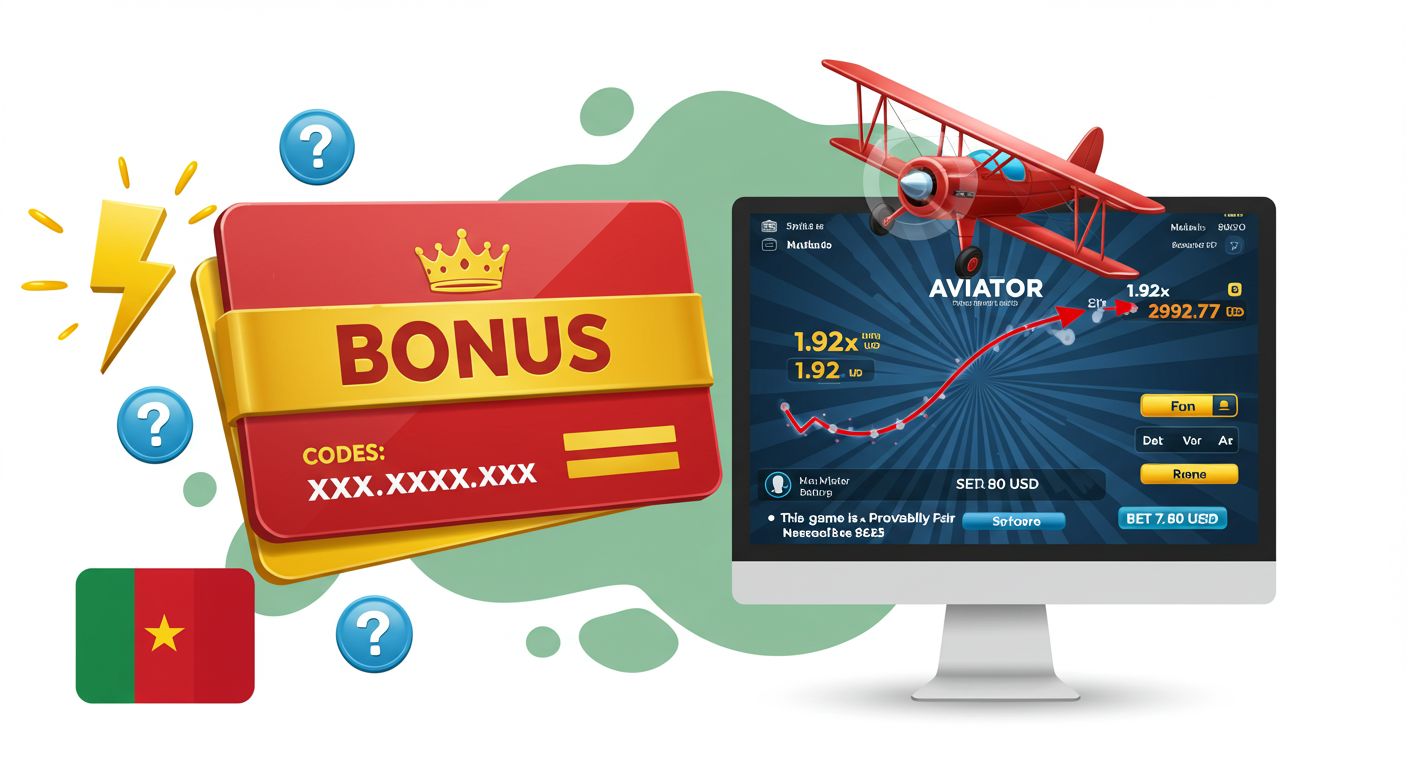
I’ve dedicated a lot of time trying out crash games, and Aviator is still the title Peruvian players ask me about most when they seek to advance from standard slots. The name says slot, but what you actually get is a real-time multiplier game where a small airplane ascends across the screen and your payout grows with every fraction of a second you stay in the round. Trying before you bet matters because it lets you absorb the rhythm, test cashout reflexes, and comprehend the math without risking a single sol. In this guide I will take you through every concrete detail that counts: how the crash mechanic works, what RTP and volatility really mean inside Aviator, the exact betting tools you have, and how to use the free demo mode to develop a practical feel before you invest real money. Everything I describe is based on the standard Spribe version of the game that leads the Peruvian market, and I will highlight where you should verify specifics on the platform you select.
The way the Crash Mechanic Really Works
The core of Aviator is a provably fair random number generator that determines a secret crash point before the round even begins. When you make your bet and the countdown hits zero, the multiplier initiates at 1.00x and rises along a predetermined curve. The round goes on until it reaches that hidden crash point, at which moment the plane departs the screen and all active bets that have not been cashed out are forfeited. The multiplier can stop at 1.01x, at 2.50x, at 100x, or at any value in between, and the distribution is weighted so that low crashes occur far more commonly than high ones.
Understanding that the crash point is fixed before takeoff is crucial because it eliminates the illusion that you can detect when the round is about to end. The accelerating ticking sound and the steepening curve do not signal an impending crash. They are purely cosmetic. I have observed hundreds of rounds in demo mode, and I can state that a round that attains 5x is no more probable to crash at 5.10x than a round that just exceeded 1.20x. The game’s mathematics are memoryless, meaning each new round is completely unrelated of the previous one. This is the single most important concept to internalize during free play, because it guards you from the gambler’s fallacy that a high multiplier is overdue after a streak of low crashes.
The Multiplier Curve and Crash Point Generation
The multiplier does not rise linearly. It goes up slowly at first, then gains pace. The formula uses an exponential growth function that makes the early seconds feel safe while the later stages become visually dramatic. This design choice is psychological: it tempts you to stay in the round a little longer because the number is climbing faster and the potential reward seems to explode. In reality, the probability of the round lasting to any given multiplier decreases steeply as the number grows. The house edge is integrated in the gap between the true odds of reaching a multiplier and the payout you receive when you cash out.
Provably Fair Verification
Every round in Aviator can be independently confirmed using cryptographic hashes. The game merges a server seed, a client seed, and a nonce to create the crash point, and after the round ends you can verify the hash to validate that the outcome was not manipulated. During demo play, you will often spot a Provably Fair icon that lets you retrieve the seeds. I recommend taking a few minutes to go through a verification exercise with a free round, because understanding this mechanism builds genuine trust in the game’s integrity before you ever fund your account.
How to Play Aviator for Free: The Advantage of Demo Mode
Nearly every online platform that offers Aviator to Peruvian players provides a demo or fun play version that needs no registration and no deposit. You simply navigate to the game, and if a real-money balance is not detected, the interface often loads a virtual balance of several thousand units. The demo mode is indistinguishable from the real-money game in every functional respect: the same crash mechanics, the same betting panel, the same double bet fields, the same auto cashout settings, and the same provably fair verification tools. The only difference is that your wins and losses do not affect your wallet.
I view the demo mode the single most underused educational tool in online gaming. It enables you to test specific hypotheses about the game without financial pressure. You can ask questions like what happens if I always cash out at 1.15x for 200 rounds, and then actually run the experiment and count the results. You can rehearse the physical motion of placing two bets and setting two different auto cashout values within a five-second countdown until it becomes automatic. You can also analyze the game’s rhythm at different times of day, although the random number generator does not care about the clock. The demo mode is extremely beneficial in Peru because internet speeds can vary, and you want https://www.marca.com/juegos-olimpicos/atletismo/2024/08/07/66b356e046163ff17b8b4579.html to know how the game performs on your connection before you have money at stake.
Getting to the Demo Mode in Peru
To initiate a free Aviator session, you typically access the game page on a casino website or a review portal that hosts the official Spribe embed. If you already have an account, find a Demo or Play for Fun button near the real-money launch option. If you are not logged in, the game often loads directly in demo mode. I advise using a desktop browser for your first few sessions because the larger screen makes it easier to read the multiplier and click the cashout button accurately. Once you are comfortable, move to your mobile device and test the touch interface, because many Peruvian players prefer to play on smartphones. The demo mode on mobile keeps the same layout, but the cashout button is positioned near the bottom of the screen where your thumb naturally rests, and you will want to verify that you can tap it without accidentally triggering a bet adjustment.
Understanding RTP and Fluctuation in Aviator
The expected return to player for Aviator is 97%, which places it in the similar range as many high-RTP slots and table games. That value indicates the long-term expected payback across millions of rounds, and it relies on optimal player decisions. In practice, your personal return hinges completely on when you opt to cash out. If you always exit at very low multipliers, you will achieve a high hit frequency but small average wins, and your effective RTP will near the theoretical number over time. If you pursue large multipliers and frequently crash with zero, your short-term results will be far more unpredictable and your realized return can swing wildly below or above 97%.
Volatility in Aviator is not a fixed variable like it is in a slot where the paytable and hit frequency are mathematically locked. Instead, volatility is player-driven. You can set the game to operate like a low-volatility gameplay by setting an auto cashout at 1.20x and placing small bets, or you can convert it into an extreme high-volatility experience by targeting 50x and understanding that you will lose many rounds in a row. This adaptability is rare and is one of the factors I find Aviator so educational for bankroll education. During demo play, I recommend experimenting with both extremes so you can feel the emotional difference between grinding out tiny consistent gains and suffering long dry spells while seeking a monster multiplier.
For Peruvian players who are habituated to fixed-volatility slots where the game controls the variance, this adjustable characteristic can be disorienting at first. The demo mode is the perfect sandbox to discover your own comfort zone. You might discover that you dislike the stress of watching the multiplier climb past 3x, or you might understand that cashing out at 1.15x wearies you to tears. Neither preference is wrong, but understanding it before you switch to real money avoids costly emotional mistakes. I always counsel spending at least a hundred demo rounds testing different cashout thresholds while monitoring your virtual balance to determine which strategy aligns with your temperament.
Multiplier values, Top win potential, and Payout math
Aviator does not feature a fixed jackpot, but the maximum multiplier is theoretically limited at an exceptionally high value, often around 1,000,000x in the Spribe version. In practical terms, multipliers above 1,000x are extraordinarily rare, and most sessions will see a peak somewhere between 10x and 200x over hours of gameplay. Your payout is always a basic multiplication: stake times cashout multiplier. If you bet 10 PEN and exit at 15.50x, you receive 155 PEN. There are no charges, no bonus round adjustments, and no maximum win limit imposed by the game itself, though individual casino platforms may set their own caps on total payout per round.
The max win potential is therefore limited only by the multiplier ceiling and the size of your bet. However, chasing a 1,000x multiplier with a large stake is a fast way to deplete a bankroll because the probability of a round reaching that height is minuscule. In demo mode, you can simulate what happens if you set a 50 PEN bet and target 500x. You will likely watch your virtual balance disappear over dozens of rounds before you hit anything close. That experience is sobering and highly educational. I believe every player in Peru should run that precise simulation with play money before ever considering a high-multiplier strategy with real funds, because seeing the balance drop on screen teaches risk in a way that reading about probabilities never can.
Payout calculations become a bit more interesting when you use the double bet feature. Suppose you place 5 PEN on Bet 1 with auto cashout at 2.00x and 2 PEN on Bet 2 with manual cashout. If the round reaches 2.00x and you manually exit Bet 2 at 4.50x, your total return is (5 × 2) + (2 × 4.50) = 10 + 9 = 19 PEN on a total stake of 7 PEN. If the round crashes at 1.80x, you lose both bets. The demo mode lets you run dozens of these split scenarios and calculate the net result, which is the ideal way to find a configuration that fits your personal profit target and loss tolerance.
Staking Selections, Restrictions, and the Two-Bet Feature
When you launch the betting panel in Aviator, you will find two separate bet fields labeled Bet 1 and Bet 2. This double bet system is one of the most effective tools the game presents, and it is entirely available in demo mode. You can put a single bet in one field and keep the other empty, or you can fill both at once with different amounts and, importantly, distinct cashout strategies. For example, I often test a configuration where Bet 1 is a cautious amount set to auto cashout at 1.50x, while Bet 2 is a tinier, riskier wager that I personally control and try to push to a larger multiplier. This enables you to hedge within a single round, guaranteeing a modest profit on one side while still having access to a bigger payout on the other.
The lowest and maximum bet limits change depending on the online platform that hosts the game, but typical ranges I have noticed in Peru start as low as 0.10 PEN and go up to about 400 PEN per bet field. Some platforms may set greater ceilings for high rollers. The demo version generally provides a ample virtual balance that lets you to try the full range without restriction. I suggest using the demo to observe how the interface handles rapid bet placement between rounds, because the countdown timer between takeoffs is short, typically around five seconds. You need to be able to change your stake, switch auto cashout values, and confirm both bet fields swiftly, and training this flow with play money develops the muscle memory that avoids misclicks when real funds are on the line.
Two-Bet Strategy
Using both bet fields successfully needs a definite plan. One common approach I see among experienced players is to place Bet 1 three to five times larger than Bet 2. Bet 1 gets an aggressive auto cashout at a low multiplier like 1.30x to 1.80x, targeting to compensate for the total round stake and produce a minor net gain most of the time. Bet 2 is kept on manual or set to a much higher auto cashout, such as 10x or 20x, and treated as a lottery ticket that sometimes pays large. In demo mode, you can experiment with this split across a hundred rounds and observe how regularly the conservative side saves the round when the risky side crashes. The numbers will teach you greater about risk management than any article can.
Useful Tips for Trying Before You Wager in Peru
My first piece of advice is to treat the demo balance as if it were real money from the very first round. It is easy to develop reckless habits when there are no consequences, and those habits can carry over directly to real-money play if you are not careful. Define a virtual session budget, say 500 PEN in demo funds, and decide in advance that you will stop when it runs out or when you double it. This method forces you to make the same calculations about bet sizing and cashout timing that you will need later. I also advise keeping a simple notepad next to you and jotting down the outcome of each round for at least 50 spins, noting the multiplier at which you cashed out and whether the round crashed before or after your exit. The pattern that emerges will tell you more about your own tendencies than any generic strategy guide.
Second, use the demo mode to try the extremes of the game’s bet range. Put the minimum allowed bet and observe how the interface responds. Then put the maximum and watch whether the game slows down or the cashout button becomes harder to press under pressure. Some platforms may impose a slight delay on large cashouts, and you want to discover that in demo mode, not when you have 200 PEN riding on a 3x multiplier. Also experiment with the double bet feature extensively. Try configurations where both bets have auto cashout, where one is manual and one is auto, and where both are manual. The coordination required for two manual cashouts is significant, and you should know whether you can handle it before real money enters the picture.
Finally, pay attention to the social feed and the statistics panel during your free sessions. The game shows a history of recent multipliers, often colour-coded to show low, medium, and high results. While past rounds do not predict future ones, studying the distribution helps you absorb how often crashes occur at 1.00x to 1.50x compared to 5.00x and above. This knowledge curbs unrealistic expectations. I also recommend paying attention to how you feel emotionally after a streak of five consecutive crashes versus a streak of five wins. If the losses make you want to increase your virtual bet size dramatically, that is a red flag you can address before real money amplifies the impulse. Aviator rewards patience and clear-headed decision-making, and the try-before-you-bet approach gives you the space to develop both qualities without cost.
Scheduled Exit and Direct Oversight: Choosing When to Leave
The auto cashout feature acts as the tool that converts Aviator from a pure reflex game into a structured strategy exercise. Before each round begins, you can input a target multiplier into the auto cashout field, and the game will promptly exit your bet at that exact value if the round continues that long. This eliminates the emotional component of watching the number rise and second-guessing yourself. I have found that setting an auto cashout is the single most effective way to stick to a predetermined plan, especially during demo sessions where the temptation to let it ride just one more time is strong even with fake money.
Manual cashout, on the other hand, provides you complete control. You watch the multiplier climb and hit the glowing cashout button whenever you decide. The risk here is delay. The human brain is wired to hold on a little longer when a number is rising quickly, and that delay is exactly what causes crashes with zero return. During free play, I deliberately practice manual cashout at odd multipliers like 2.35x or 3.70x to train myself to act on a pre-chosen number rather than reacting to the curve. You can also combine manual and auto modes by setting a high auto cashout as a safety net while attempting to exit manually at a lower target, though this needs quick fingers and a calm mind.
Setting Your Auto Cashout Value
Choosing the right auto cashout number is a personal decision that hinges on your risk tolerance and session goals. A value of 1.20x will succeed in roughly four out of five rounds based on the game’s crash distribution, giving you frequent small wins that can slowly grow a balance. A setting of 3.00x succeeds far less often but triples your stake when it hits. I recommend using the demo mode’s statistics panel to review the last 200 or 300 rounds and count how many times each multiplier threshold was reached. That exercise offers you a realistic sense of the waiting periods you will endure between wins at different levels, which is invaluable for setting expectations before you play with real Peruvian soles.
Visual Style and Visual Atmosphere
Aviator leans on a minimalist aviation theme that does not distract from the numbers. The color palette is dominated by deep black, neon red, and white grid lines that look like a radar screen or a stock chart. The airplane itself is a clean red silhouette with a faint vapor trail, and the multiplier curve draws in real time as a white line that climbs and eventually stops abruptly when the round crashes. There are none animated characters, zero cinematic cutscenes, and zero thematic soundtracks layered with orchestral swells. Instead, you experience a low electronic hum and a ticking sound that speeds up as the multiplier climbs. I find that does more for tension than any complex theme could.
This minimalist design is intentional. Spribe designed Aviator to work smoothly on mobile devices with weak connections, which carries significant weight in Peru where many players use games on mid-range Android phones and sometimes depend on mobile data. The interface is fast to load, the plane animation is lightweight, and the betting panel remains responsive even when the multiplier is climbing rapidly. The visual focus stays on the growing number and the cashout button, which glows green and beats softly to remind you that you can cash out at any moment. There is no mess, no pop-up advertising for other games, and no cluttered menu structure covering the play area.
For a Peruvian audience experiencing Aviator for the first time, the atmosphere can seem cold compared to the bright, festive graphics of a typical Latin American-themed slot. I personally view that as an plus. The removal of sensory overload enables you to concentrate on the single skill this game tests: your ability to evaluate the situation and respond decisively. The demo mode keeps every visual and audio element precisely as they show up in real-money play, so you can get used to the pressure of the ticking sound and the flashing multiplier without financial consequences.
What Distinguishes Aviator Versus Traditional Slots
If you approach Aviator looking for reels, paylines, or scatter symbols, you will feel confused within the first second. This is not a slot in the classic sense. The screen shows a black background with a graph grid, a red airplane taking off from the left, and a multiplier counter that initiates at 1.00x and climbs. Your only decision is when to press cashout. There are no spinning reels, no wilds, no free spin triggers, and no bonus rounds concealed behind three scatters. That fundamental difference alters how you handle bankroll management and session rhythm. Because every round runs anywhere from a few seconds to a rare minute or more, you are not anticipating a feature to land. You are actively determining the outcome of each bet.
The absence of paylines also means there is no paytable in the traditional sense. Your win is simply your stake multiplied by the number showing on the screen at the instant you cash out. If you bet 5 PEN and hit cashout at 2.34x, you walk away with 11.70 PEN. If you wait too long and the plane flies away, you lose the entire stake. This direct relationship between timing and payout is what makes Aviator feel more like a trading or reflex game than a slot. For Peruvian players used to video bingo or classic three-reel machines, the mental shift is significant, and that is exactly why a demo session is useful before you put money down.
Another key difference is social transparency. The interface displays recent rounds from other players, their cashout multipliers, and the total amounts won. You can see that someone just turned 2 PEN into 20 PEN at 10x, while another player lost because they held too long. That shared data feed builds a sense of collective experience you never get on a solitary slot machine. It also gives you real historical information you can study during demo play to understand multiplier distribution patterns, even though each round is independently generated.